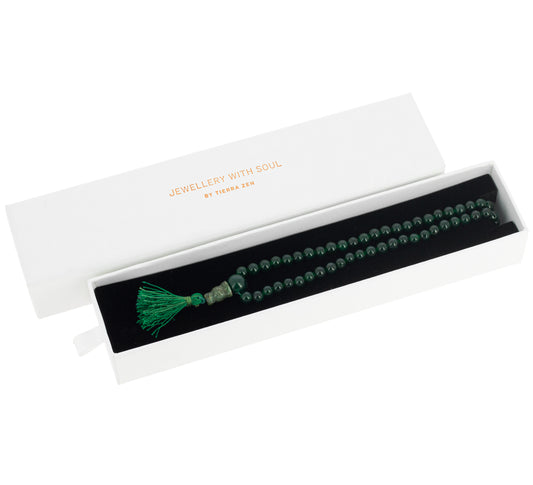
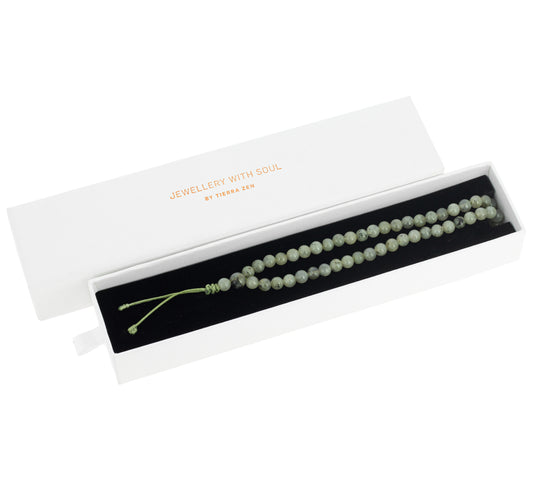
Complete guide to understanding and meditating with your japa mala
The Japa Mala, or prayer beads, is a traditional tool used in meditation and mantra recitation practices to help sustain focus, calm the mind, and deepen the experience of the present moment. The term comes from Sanskrit (japa = to mutter/recite, mala = garland) and has been used for thousands of years in traditions such as Hinduism and Buddhism to accompany the conscious repetition of mantras, prayers, or affirmations.
Unlike a simple accessory, the Japa Mala acts as a physical and sensory anchor for meditative practice: by moving each bead with your fingers while reciting or focusing on a mantra or intention, you help quiet the mind and—should it wander—bring your attention back to the "here and now."
Meaning and symbolism of the Japa Mala
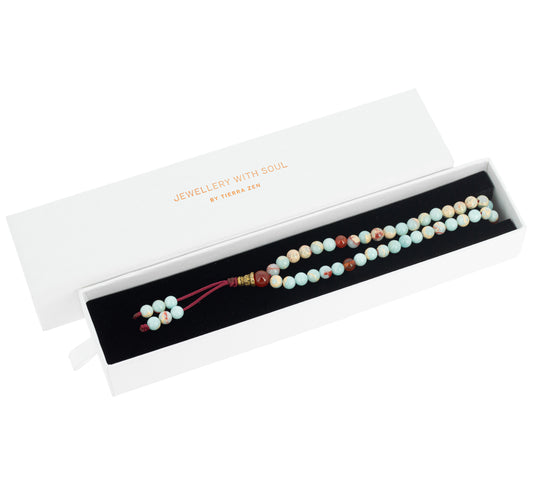
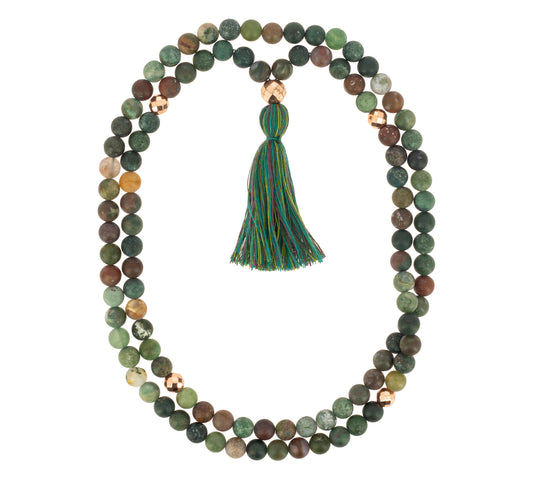
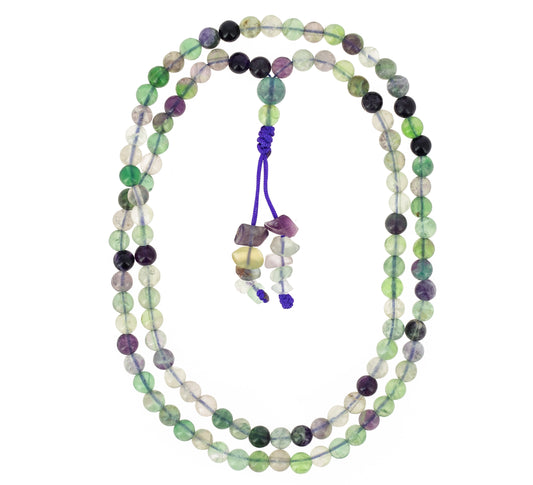
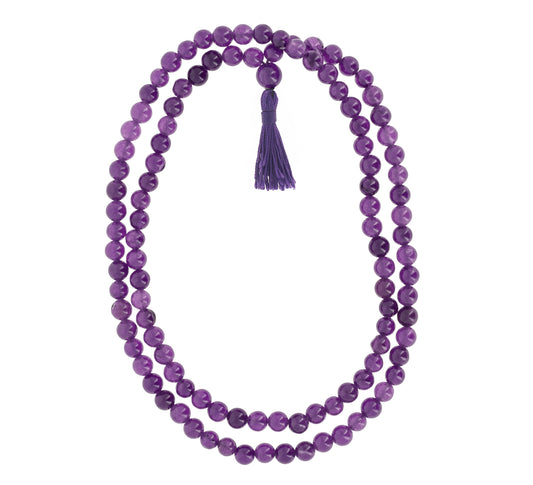
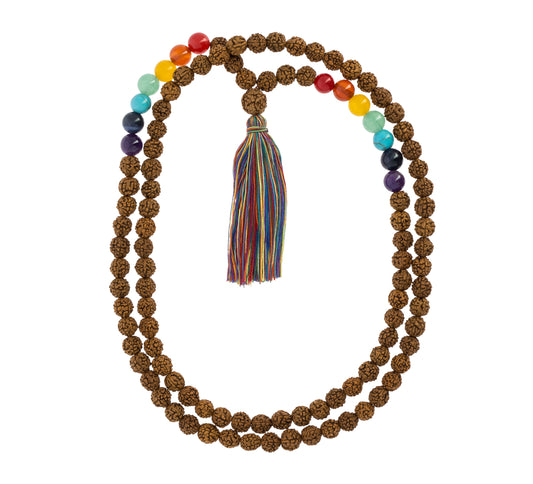
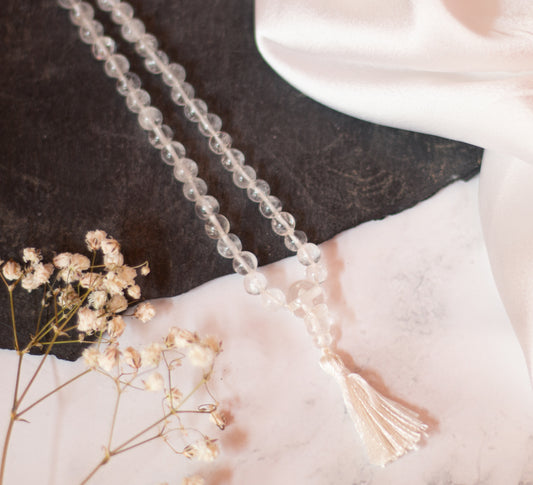
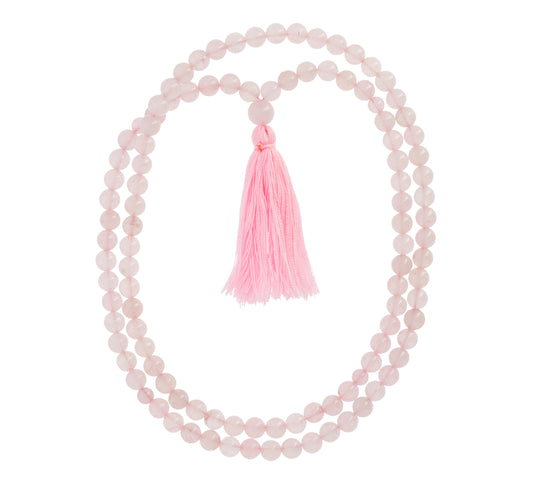
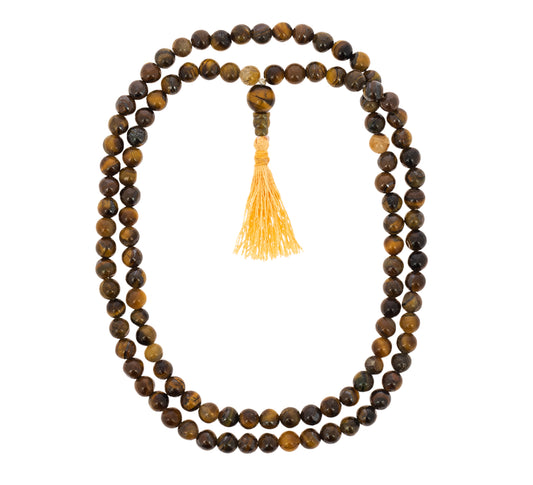
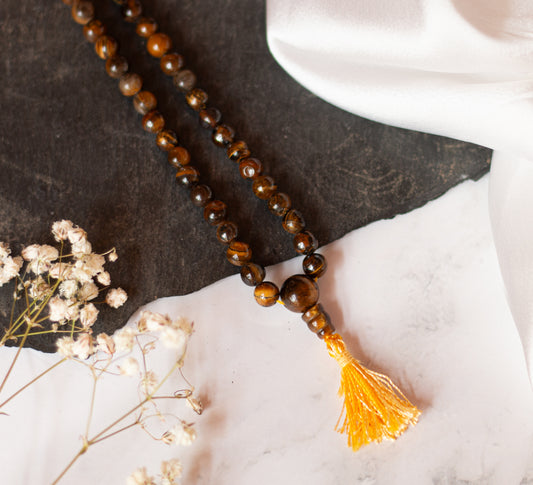
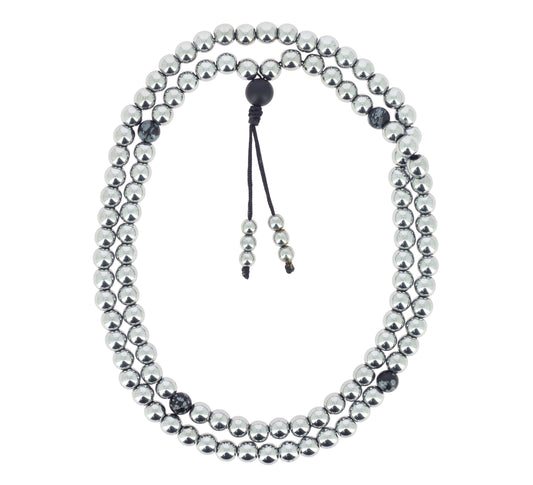
Traditionally, a Japa Mala consists of 108 beads plus one central bead known as the “guru” or “meru”. While variations with fewer beads exist (such as 27 or 54), the set of 108 represents a sacred number with deep spiritual significance across various traditions, symbolizing the complete cycle of life, the body-mind-universe connection, and the overcoming of mental obstacles.
The guru bead marks the beginning and end of each repetition cycle and serves as a reference point: upon reaching it, one does not cross over it. Instead, if you wish to continue, you reverse the direction, symbolizing respect and continuity.
How to meditate with your Japa Mala
The practice with a Japa Mala is focused on combining breath, touch, and conscious repetition:
- Find a comfortable posture: Sit with a straight back and eyes softly closed or cast downward.
- Hold the mala in your hand: Traditionally, the right hand is used, holding the mala between the thumb and the middle or ring finger.
- Start next to the guru bead: Grip the first bead to the left of the guru and recite your mantra, affirmation, or intention—either mentally or in a soft voice.
- Slide one bead for each repetition: With each turn, move your thumb toward the next bead, using the physical contact to anchor your attention.
- Complete the 108-bead cycle: When you reach the guru bead again, you can turn the mala around to start another cycle if you wish to prolong your practice.
This rhythmic gesture helps reduce internal distractions, synchronizes breathing with mental repetition, and makes it easier to sustain focus on a specific intention.
Materials and energetic meaning
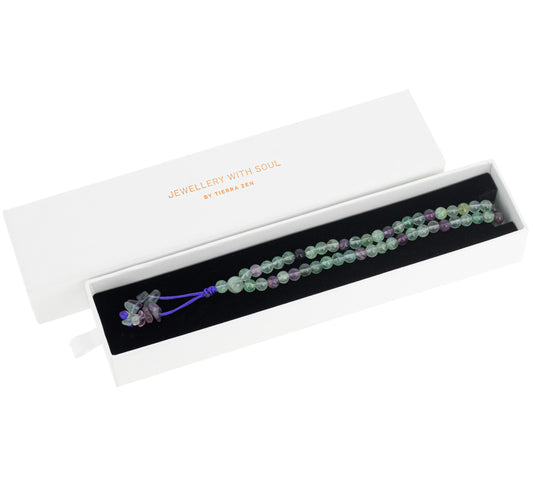
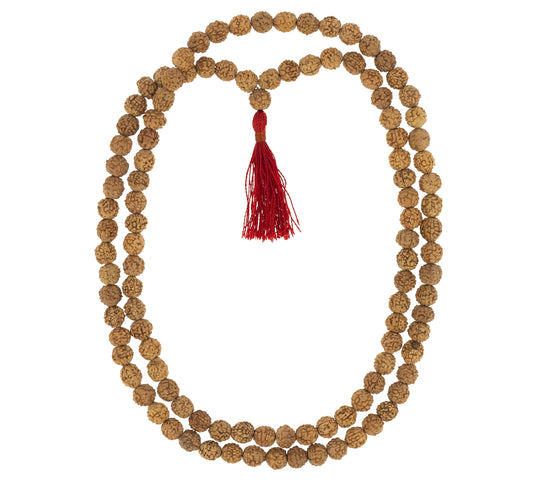
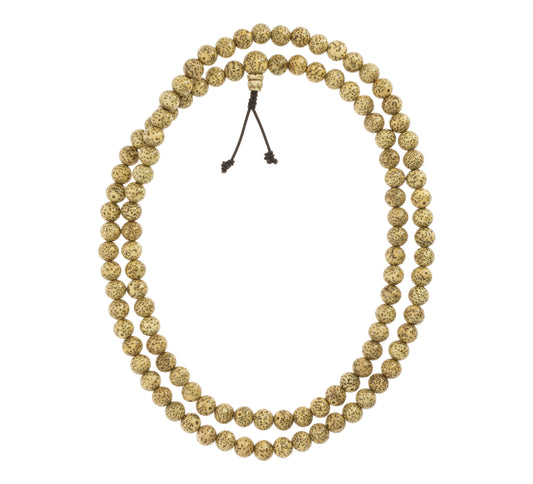
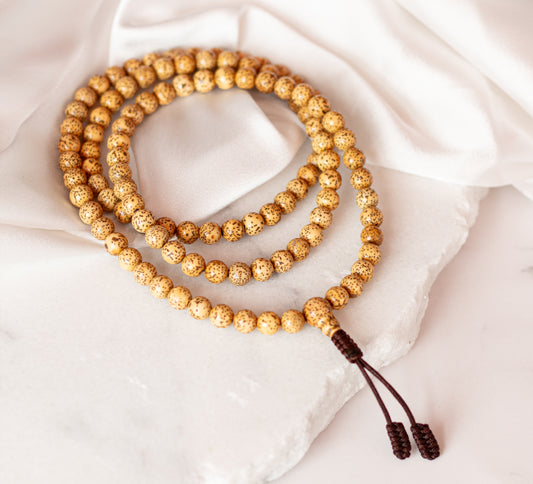
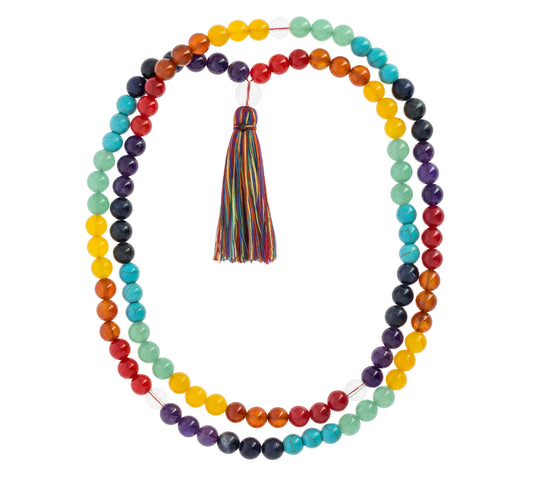
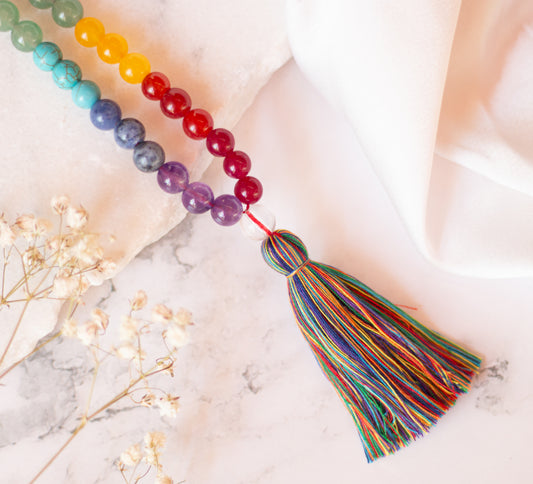
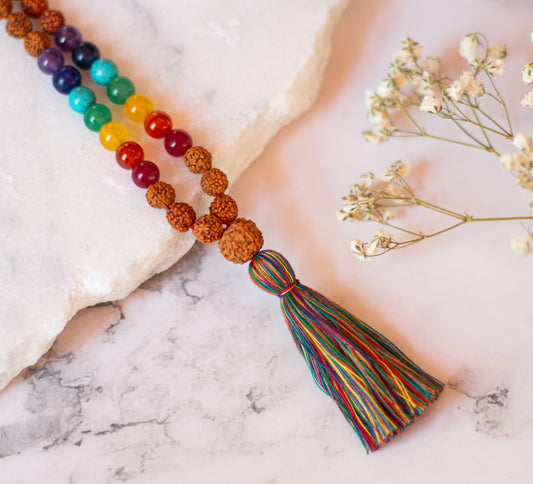
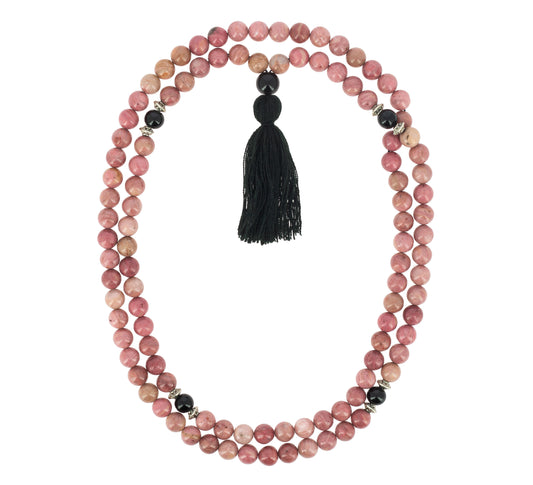
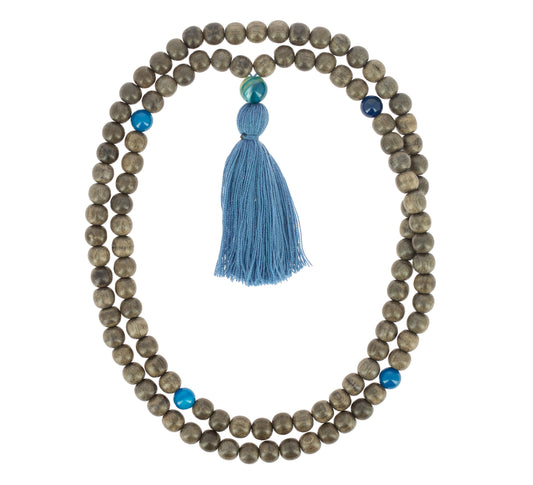
Japa Malas can be made from various materials—such as sacred wood, seeds (rudraksha, lotus), semi-precious stones, or gems—and each brings a particular sensitivity to the practice. Some materials are associated with specific energetic qualities, such as calm, protection, or focus; choosing the mala that resonates with you can enrich your meditative experience.
Beyond its meditative function, many people wear their malas as a constant reminder of their personal or spiritual intention, even outside of formal practice, as a symbol of presence, purpose, and continuous calm.
Tips to begin your practice
- Select a meaningful mantra: This can be a traditional mantra, an affirmative phrase, or an intention that connects you with your breath and purpose.
- Breathe mindfully: Before beginning, take a few deep breaths to center yourself in the present.
- Use the mala with respect: While it is an accessible tool for everyone, honoring it as a sacred object of practice can strengthen your connection to your intention and inner discipline.
Benefits you may experience
Practicing with a Japa Mala can help you:
- Improve concentration and reduce intrusive thoughts.
- Tune your breathing with your intention and deepen your meditative state.
- Cultivate calm, focus, and inner presence, both during and outside of meditation.




 NEW
NEW
 NEW
NEW
 NEW
NEW