Guide to choosing and using Tibetan flags
Tibetan prayer flags, originating from the spiritual traditions of the Himalayas, bear printed mantras, symbols, and prayers intended to spread peace, compassion, wisdom, and goodwill through the wind that moves them. Instead of sending prayers to a specific deity, it is believed that the wind disperses the blessings inscribed on the fabric for the benefit of all sentient beings.
In this collection, you will find flags made with multiple colors, formats, and prints, designed both for those seeking to fill their environment with positive intention and for those wishing to connect with a millenary tradition of harmony with nature.
Traditional and spiritual meaning
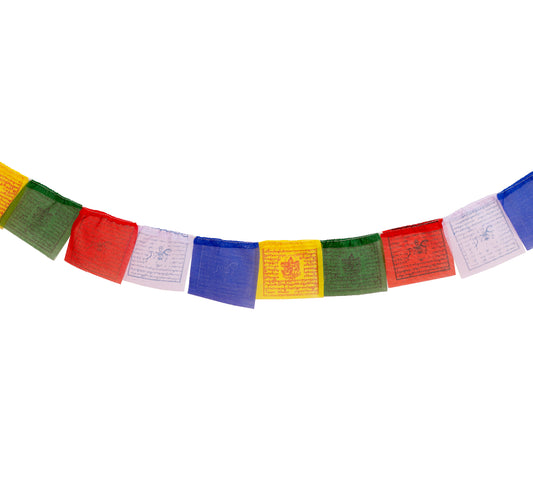
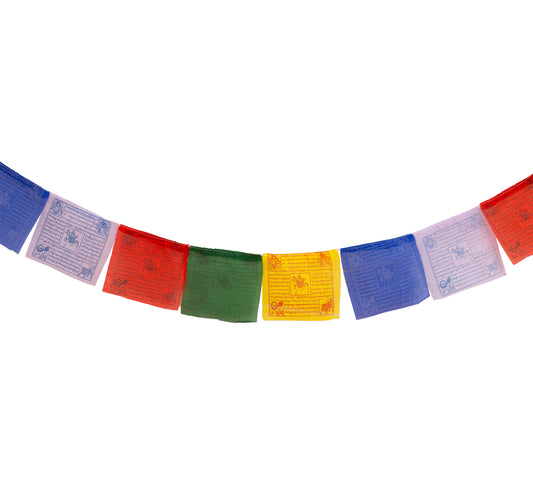
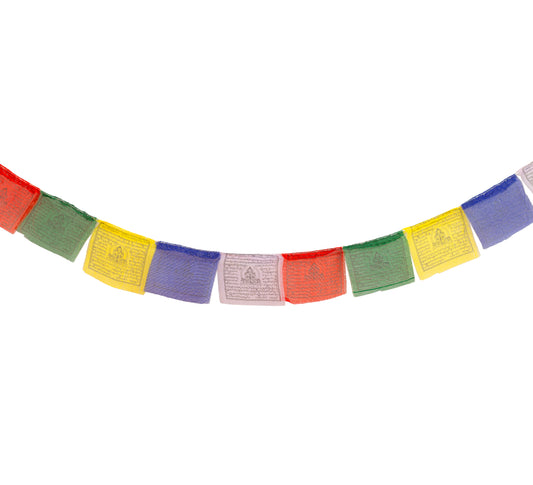
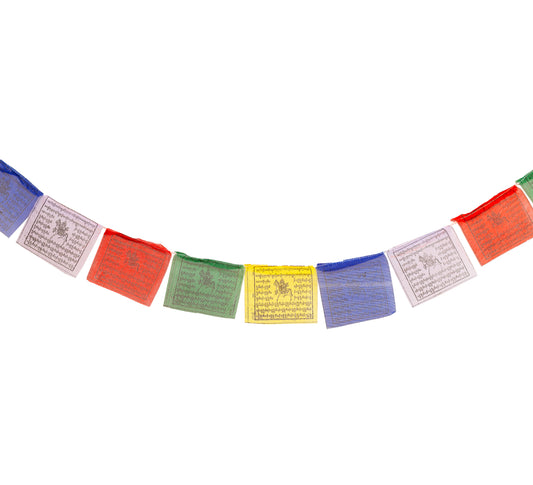
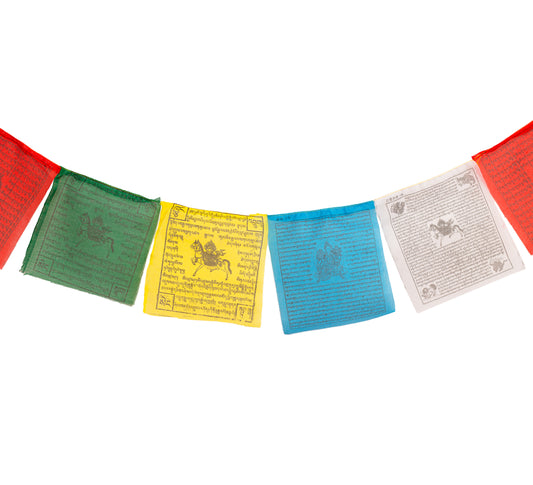
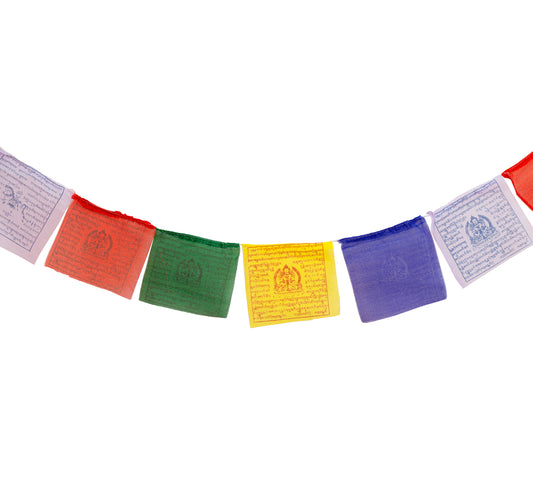
Tibetan prayer flags or lungta (wind horse) have their origin in the pre-Buddhist Bon tradition. These flags combine color, symbol, and sound with the intention of distributing blessings in the space where they are placed. According to the Tibetan Buddhist tradition, these flags are always arranged in groups of five colors placed in a specific order: blue, white, red, green, and yellow.
Each color is associated with a natural element, a family of Buddhism, and a spiritual quality:
- Blue: sky or space, symbolizing vastness and openness.
- White: air and wind, associated with clarity and breath.
- Red: fire, energy, and transformation.
- Green: water, harmony, and balance.
- Yellow: earth, stability, and growth.
The joint presence of these five colors represents the harmony of the elements and the intention to create a balanced and serene environment.
How Tibetan flags work
The flags are not placed in a fixed position as static decoration, but are hung in places exposed to the wind —such as balconies, terraces, or gardens— so that the swaying of the air activates their prints. Every time the flags wave, it is believed that the printed prayers are integrated into the breeze, spreading their blessings to the entire environment.
Unlike ritual objects consecrated with a single intention, these flags are a symbolic bridge between the human and nature: they invite the mind to open, to let go, and to share good intentions with all beings.
Where to place them and how to care for them
- Height and outdoors: hang them in areas where there is a constant breeze so that the movement of the wind "activates" the prayers.
- Respect and symbolism: avoid placing them on the ground or in places where they might break or deteriorate; traditionally they are treated with respect.
- Color and order: maintain the traditional color order (blue, white, red, green, yellow) to preserve their symbolic meaning.
- Renewal: over time, colors may fade. In many traditions, they are replaced every year as a gesture of renewal of prayers and blessings.
Integrating Tibetan flags into your environment
Placing Tibetan flags is not just a decorative gesture, but a practice of intention and attention. Seeing them wave can remind you to:
- Accept impermanence, as their colors fade over time.
- Share positive energy and compassion openly.
- Create an environment that favors calm, contemplation, and connection with nature.
Although originating from Buddhist contexts, many people from diverse traditions use them today with conscious intention —as a way to infuse their spaces with serenity and beneficial thought for all.