Guide to Choosing and Using Your Mokugyo (Wooden Fish)
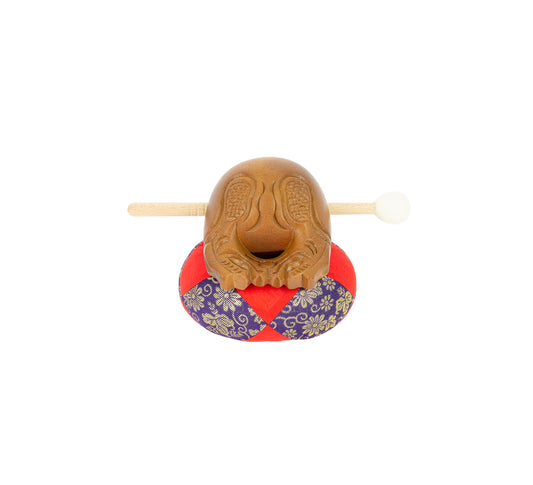
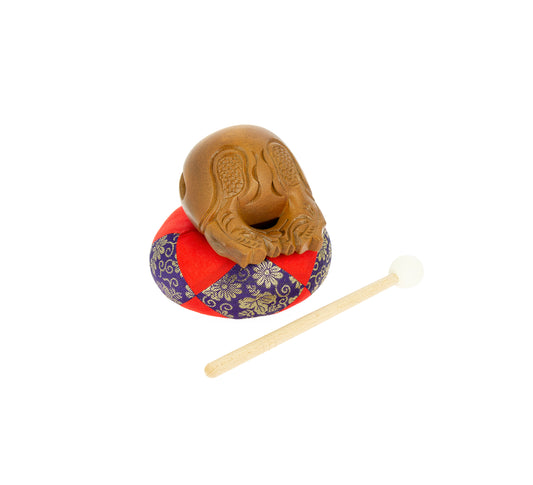
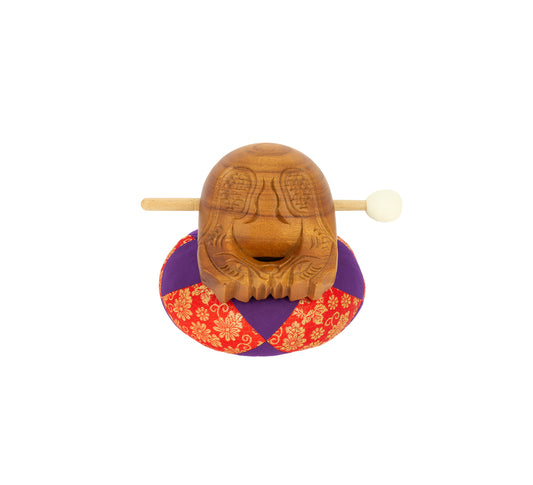
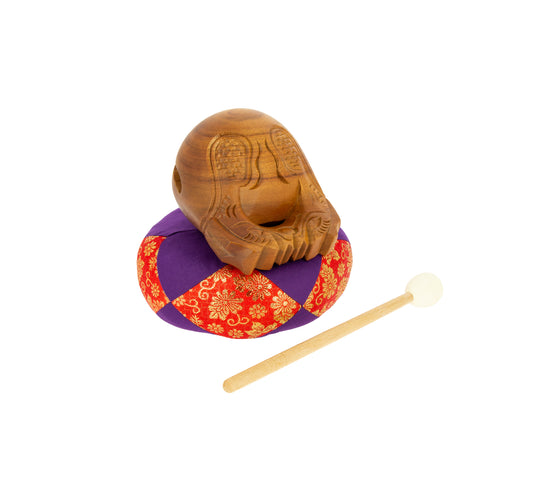
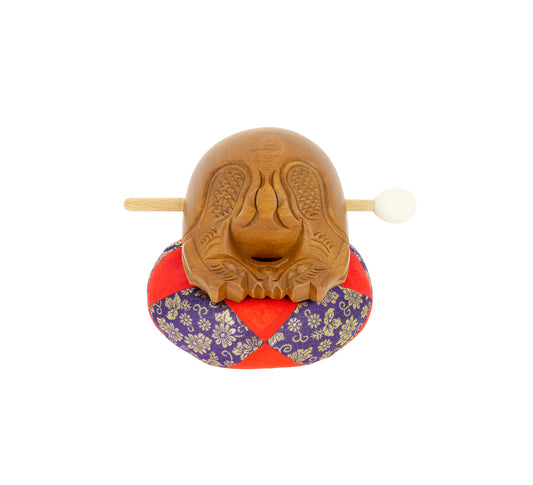
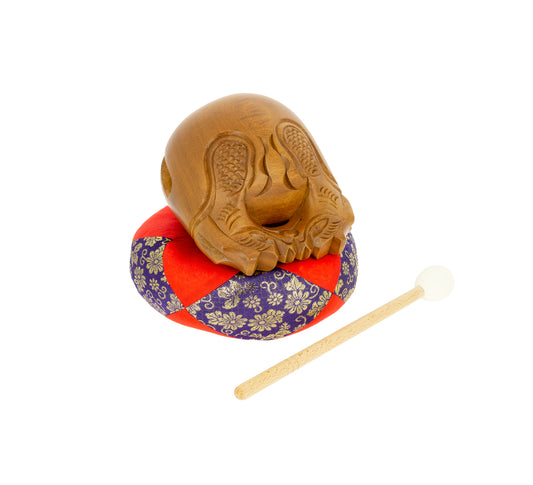
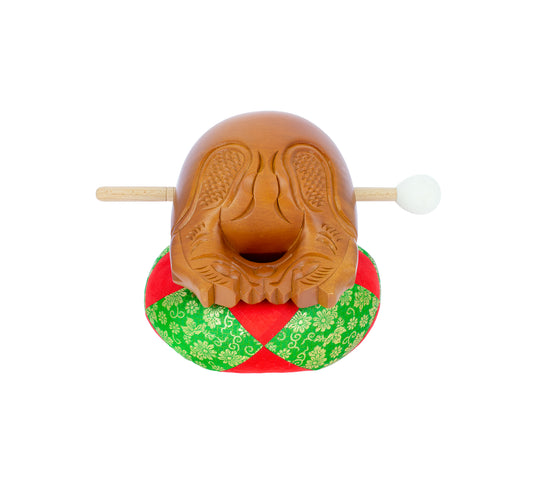
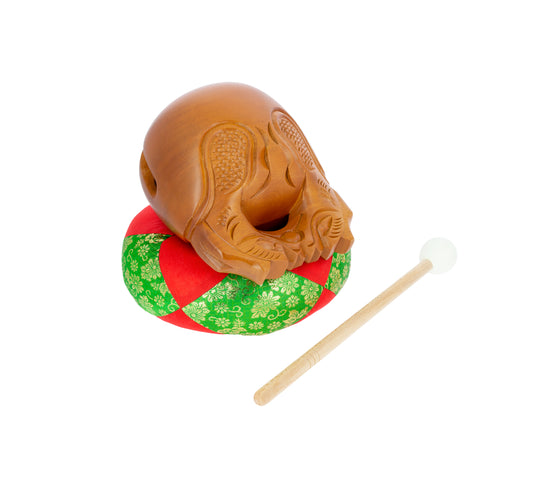
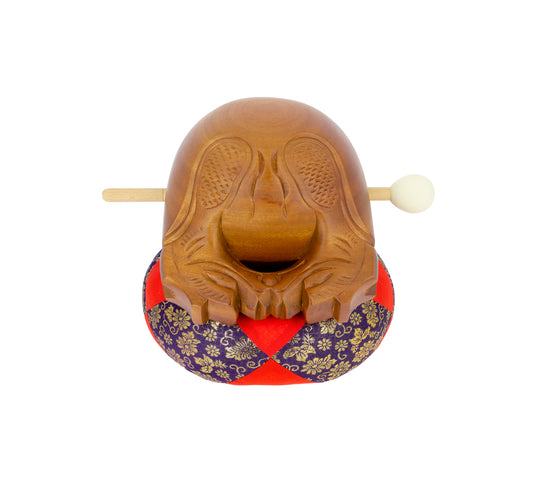
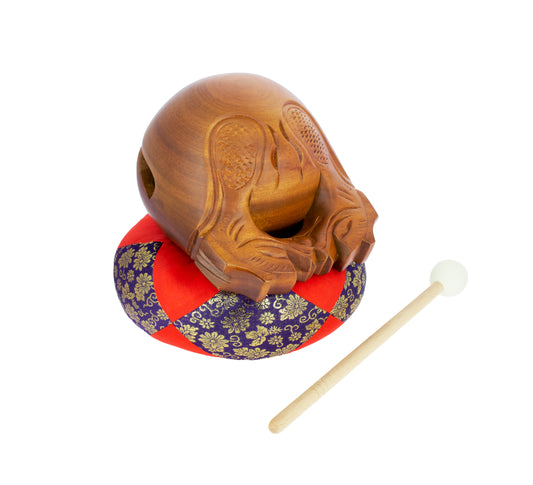
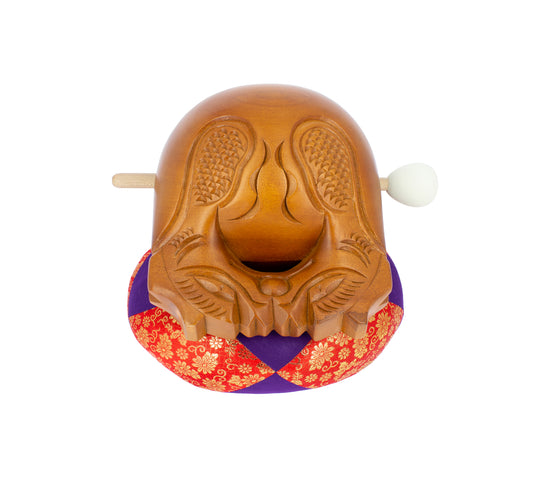
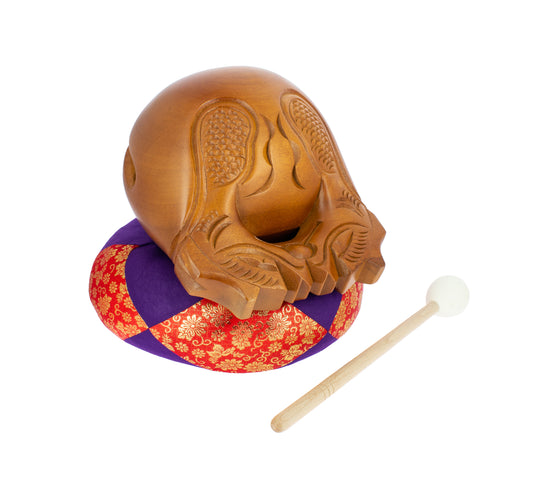
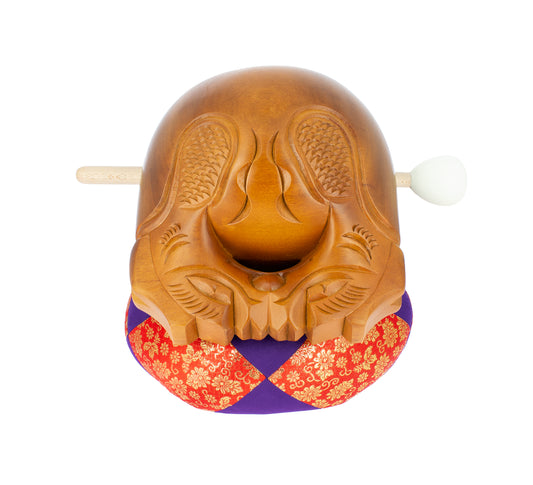
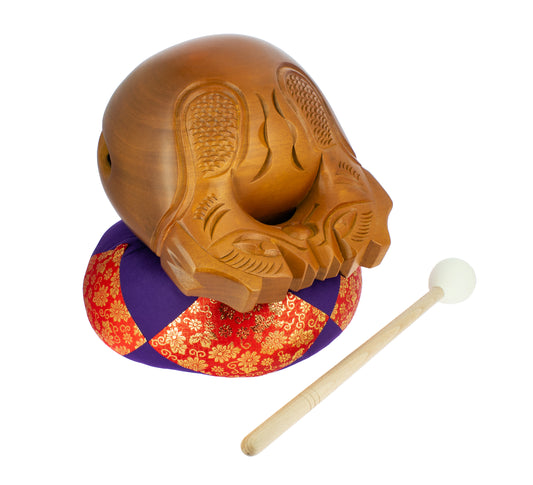
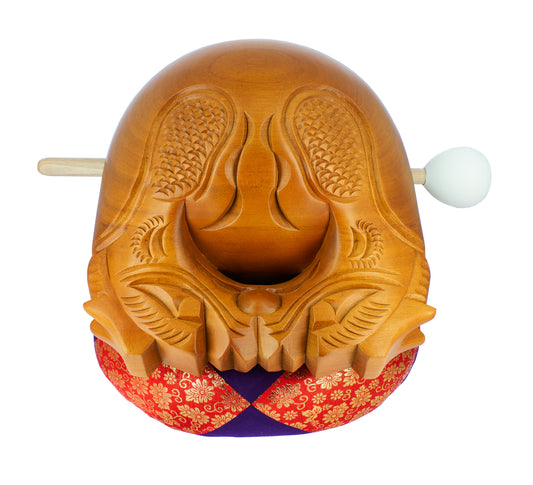
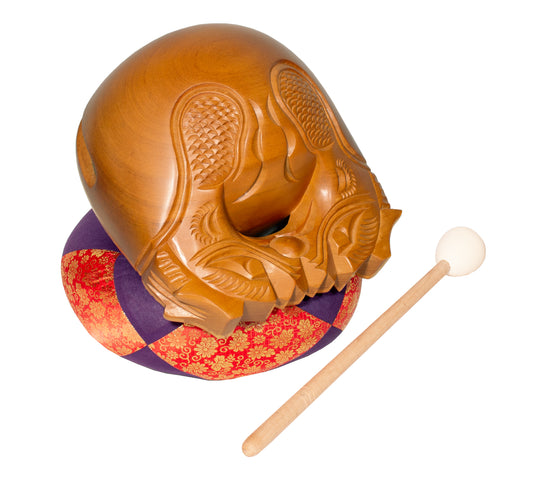
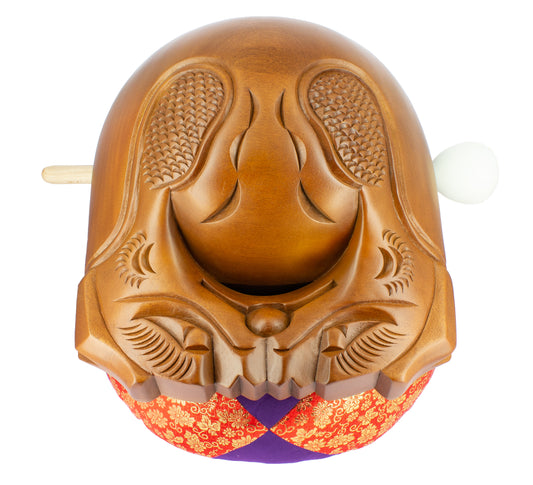
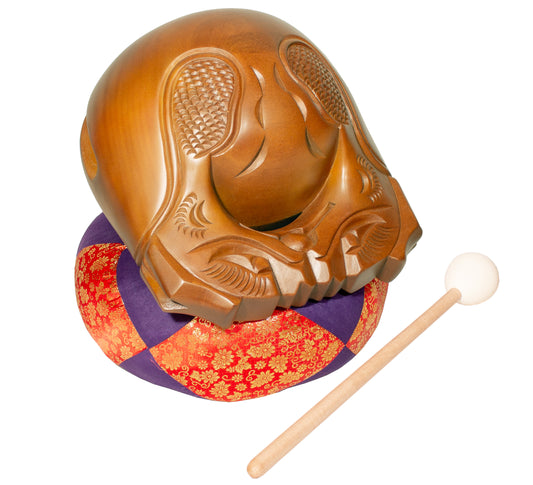
In this collection, you will find wooden fish in various sizes, each presented with its own mallet and cushion. Every mokugyo is designed to integrate seamlessly into your practice space, whether for personal meditation sessions or as part of a broader contemplative environment.
Meaning and Symbolism of the Wooden Fish
The mokugyo takes its name from the Japanese kanji 木魚, which literally translates as “wooden fish”. The fish is a traditional symbol of vigilance and alertness because, according to tradition, fish never close their eyes; they therefore represent a mind that is always awake. This imagery serves as a constant reminder to meditators of the importance of maintaining mindfulness and awareness.
Beyond symbolism, when a group gathers to chant sutras, the rhythm produced by the mokugyo helps to unify the chant, marking cadences that harmonise breath, voice, and focus.
How to Use a Mokugyo
- Place the mokugyo on its cushion or support: This prevents the instrument from sliding or being damaged and ensures a clean, resonant sound.
- Strike it gently with the mallet: Your strikes will determine the pace of the recitation or chant.
- Accompany your practice with sound: You can use it to mark the beginning and end of meditation, accompany the chanting of mantras, or simply use the mokugyo to centre your attention during moments of silence.
The sound of the mokugyo does more than set an external rhythm; it acts as an anchor for the mind, helping to sustain focus and create a soundscape that invites calm and clarity.
How to Choose Your Wooden Fish
- Size and Tone: Smaller mokugyos emit a higher pitch, perfect for small spaces or individual use. Larger models offer a deeper, more immersive resonance, ideal for group practices or larger rooms.
- Wood and Craftsmanship: Instruments carved from dense, high-quality wood provide a clearer and more sustained sound, enhancing both the sonic experience and the instrument's durability.
- Intended Use: If you plan to travel with it, choose a manageable, smaller size. If you seek a powerful sonic presence for a dedicated altar or dojo, opt for pieces with greater volume and weight.
Integrating the Mokugyo into Your Practice
You can use the mokugyo to:
- Accompany the recitation of sutras or mantras.
- Create a soundscape that promotes presence and tranquility.
- Signal the start and conclusion of a meditation session.
Even outside of formal practice, the sound of the mokugyo can help you reset your mindfulness throughout the day.